Montessori Philosophy

A child-centered approach to education that
nurtures independence, purpose, and joy.

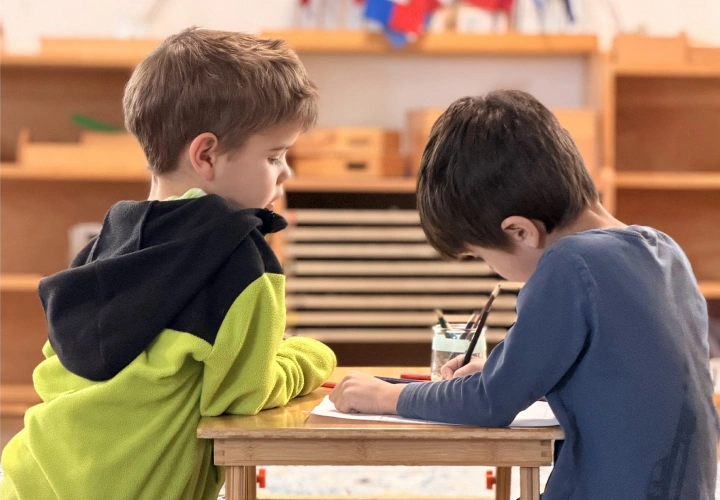
Child working on a hands-on activity while a teacher holds another child

What is Montessori?

Montessori is an educational philosophy developed by Dr. Maria Montessori over 100 years ago, and it’s more relevant today than ever.

At its core, Montessori respects the unique pace, interests, and potential of every child. It is a whole-child approach that supports intellectual, emotional, social, and physical development in an integrated, hands-on environment. Children in Montessori classrooms are active participants in their own learning. With guidance from trained teachers, they choose meaningful work, explore deeply, and grow into capable, confident individuals.
Black-and-white portrait of Dr. Maria Montessori
Dr. Maria Montessori

Key principles of
Montessori education

Two children working together at a classroom table

Child-centered learning

Each child is met where they are: academically, emotionally, and developmentally. Teachers guide rather than instruct, helping students discover knowledge for themselves.
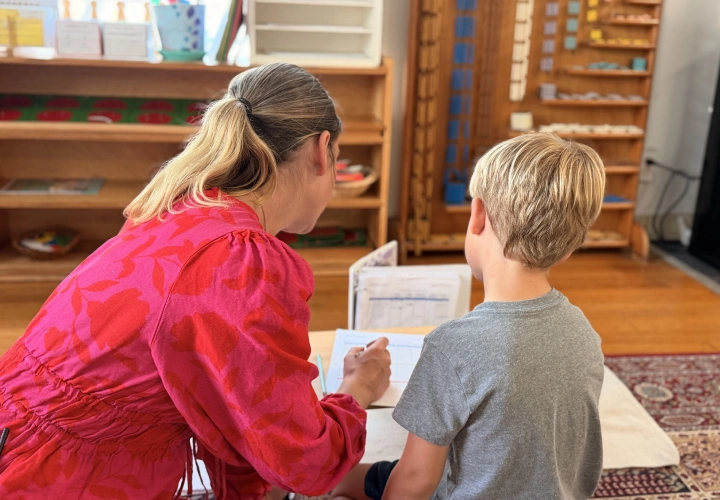
Teacher working one-on-one with a student in a classroom

Prepared environment

Classrooms are calm, beautiful, and filled with purposefully designed materials. Everything is arranged to promote independence, focus, and a love of learning.
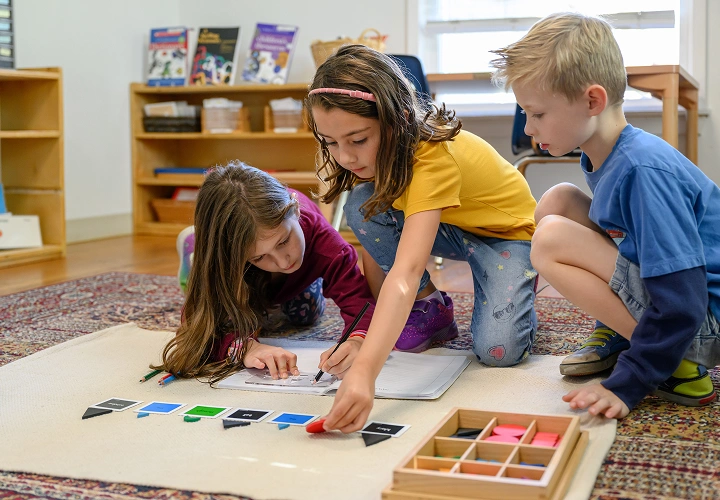
Children sorting colored shapes during a hands-on learning activity on the floor

Hands-on materials

Students learn by doing. Specialized Montessori materials allow them to explore abstract concepts in concrete, tactile ways, leading to true understanding and mastery.
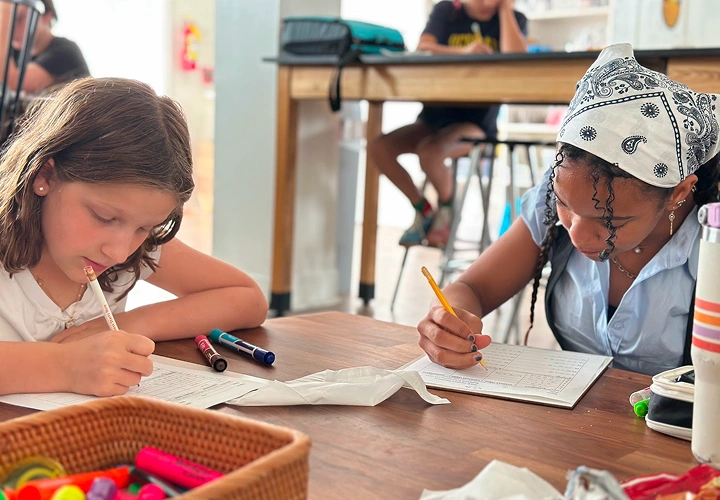
Children sorting colored shapes during a hands-on learning activity on the floor-1

Uninterrupted work time

Extended blocks of work time (typically 2–3 hours) allow students to fully engage, concentrate, and problem-solve without unnecessary interruption or transition.

Mixed-age classrooms

Students of different ages learn together, creating opportunities for mentorship, collaboration, and leadership. Younger students learn from older peers, and older students reinforce their understanding by helping others.


Why Montessori works

As children grow, the Montessori curriculum adapts to meet their changing developmental needs, from practical life work in early childhood to abstract reasoning and self-direction in the Middle Years.

At every level, they are supported by skilled teachers and a community that sees, hears, and values them.

Montessori helps children develop the skills and habits they’ll use for a lifetime:

Independence and motivation icon

Independence and intrinsic motivation

Sensorial activities icon

Deep concentration and critical thinking

Confidence, resilience, and joy in learning

Heart icon

Respect for self, others, and the environment

AMS Logo

Montessori 

at St. Stephen’s

We are accredited by the American Montessori Society (AMS) and deeply committed to authentic Montessori practice. From our toddler classrooms to our Middle Years program, our curriculum honors the spirit of Montessori while integrating meaningful innovation, enrichment, and Episcopal values.